The Message Lag: What Time Zone Differences Reveal About Relationship Prioritization and Adaptability
 Mia Bennett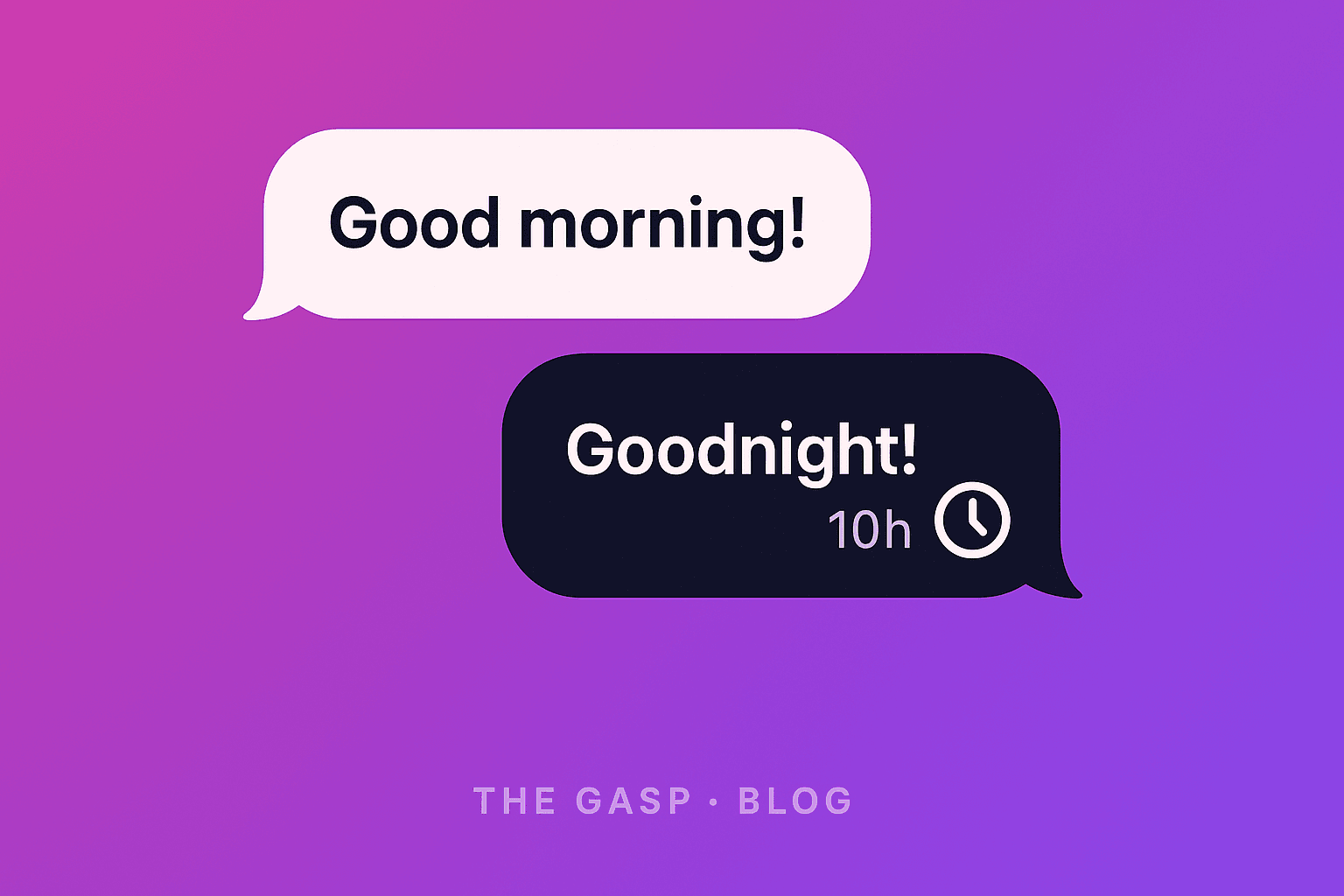
Introduction
In our digitally connected world, communication transcends borders and oceans. Yet, when it comes to maintaining relationships across time zones, the digital bridge can sometimes feel like a tightrope. How we navigate this time zone gap: especially in text conversations: can reveal much about our relationship dynamics. The Gasp helps us see these patterns clearly, moving beyond unreliable memory to cold, hard data.
The Role of Time Zones in Communication
Time zones introduce a unique layer of complexity to digital conversations. Whether it's a friend living across the country or a partner halfway around the globe, the lag in replies can often be attributed to these geographical divides. But what does this delay tell us? More importantly, what does it reveal about how we prioritize our relationships?
Prioritization in Relationships
When analyzing text-message data, a common observation is the timing of replies. People often assume that quick responses signify high importance or priority. Yet, this isn't always the case when time zones come into play. For instance, a delayed reply might simply align with the recipient's waking hours or work schedule.
Observation: If someone consistently adjusts their routine to accommodate another's time zone: perhaps staying up later or waking earlier: it signals a deliberate effort to prioritize that relationship. This adaptability, often seen in long-distance relationships, underscores a mutual commitment that transcends mere convenience.
Adaptability and Flexibility
Adaptability is another crucial factor highlighted by time zone differences. Those who manage these challenges effectively often demonstrate greater flexibility. They find creative solutions to maintain the flow of conversation, such as setting specific times for virtual "meet-ups" or using asynchronous communication to keep the dialogue alive.
Consider how the tone of a conversation can shift based on the timing of messages. Late-night exchanges might carry more intimacy, while early morning texts could be more pragmatic. Recognizing these shifts helps partners adjust their communication style to suit the situation, fostering deeper understanding and connection.
Analyzing Real Patterns with The Gasp
The Gasp allows users to import chat exports and analyze patterns like reply gaps and who initiates conversations. This data-driven approach provides a clear picture of communication habits that memory alone cannot offer. By examining metrics such as average response times and initiation frequency, users can gain insights into the dynamics of their relationships.
Key Patterns to Look For
- Reply Gaps: How long do you wait before responding? Do you notice longer gaps during specific times of the day?
- Initiation: Who tends to start conversations? Is there a balance, or does one person typically take the lead?
- Tone Shifts: Does the tone of the conversation change depending on the time of day or frequency of messages?
Understanding these patterns can help individuals identify areas where they might need to adjust their communication strategies. For example, if one person consistently initiates conversations, it might indicate a need for more balance in engagement.
Conclusion
Time zone differences are more than just logistical hurdles; they are windows into the ways we prioritize and adapt within our relationships. By examining actual communication patterns, rather than relying on memory, we can gain valuable insights into the dynamics at play.
The Gasp offers a unique opportunity to delve into these patterns, helping users understand and enhance their digital interactions. By focusing on data rather than gut feelings, we can nurture relationships with greater intention and clarity. Download The Gasp to start uncovering the real patterns in your conversations.